
For generations, the idea of cultivating immortality has fascinated people across cultures. From ancient emperors chasing eternal life to modern readers hiding under blankets with fantasy novels, the dream of transcending ordinary limits has never lost its charm. In a world where fantasy storytelling spreads through books, films, and games, even communities discussing trends through platforms like Crickex Sign Up insights often recognize how powerful the appeal of cultivation stories can be. The concept itself feels timeless: one breath of pure energy drawn inward, one breath of mortal air released, and suddenly a path opens toward limitless potential.
The typical cultivation journey follows a familiar rhythm. A humble beginner gathers rare treasures, explores vast mystical lands, and stumbles into extraordinary adventures that ordinary people might never experience in a lifetime. Through patience and discipline, the practitioner refines energy, builds a solid foundation, and gradually ascends through realms of power. Years later, once unreachable legends may seem insignificant. Kingdoms rise and fall, rivers shift their course, and the world transforms over centuries, yet the cultivator continues along the same eternal path.
 Because ordinary people lack spiritual roots in reality, they endlessly recreate this fantasy in countless stories and games. The systems may vary in name or style, but the spirit remains the same. Whether it is refining spiritual energy, mastering mystical techniques, or discovering hidden relics, the core idea of growth and transcendence continues to captivate audiences. When creators manage to present this familiar formula in an engaging way, it becomes irresistible entertainment.
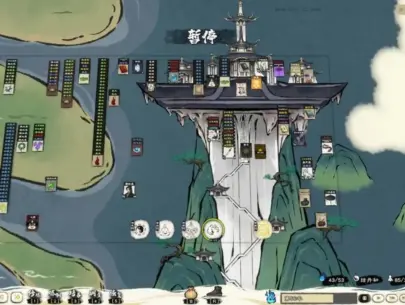
Card Cultivation takes that traditional fantasy framework and reshapes it into something surprisingly mechanical. Inspired by the structure of stack-based simulation games, nearly every element of the cultivation world becomes a card that can be dragged, stacked, and arranged. Materials for crafting artifacts appear as cards gathered from different adventures. Some come from icy pools deep within hidden valleys, others from mysterious ruins discovered during dangerous explorations. Each piece contributes to the ongoing process of building stronger tools and unlocking new possibilities.
Another cluster of cards represents spiritual herbs and rare ingredients. Without magical shortcuts, players must patiently collect plants and fruits from the wilderness or cultivate them within their own fields. Certain legendary herbs remain extremely scarce, forcing players to carefully decide whether to preserve them or refine them into powerful pills. Sometimes a crafting attempt fails, and the loss feels painful, almost as if the cultivator’s resolve itself has been shaken.
Alongside these ingredients sit rows of completed elixirs. Some enhance breathing techniques or strengthen the body, while others manipulate enemies through illusions or toxins. In this world, moral boundaries are flexible, and survival often depends on clever resource management. If internal turmoil appears after questionable actions, players can simply combine mental state cards with recovery cards to restore balance over time. Even abstract ideas like thoughts, insights, and emotional stability are transformed into interactive cards.
Through the cultivation workstation, spiritual energy cards merge with the player’s character card to generate cultivation progress. Combining two thought cards produces a new insight, and merging insights leads to the discovery of deeper cultivation methods. Exploration also becomes flexible. Players may personally travel to energy-rich mountains or send spirit beasts to search for hidden treasures. When time is limited, spiritual awareness cards can even scan areas remotely, saving valuable effort.
Eventually, when a character reaches higher realms such as the golden core or nascent soul stage, those achievements also become cards that can interact with the system. A golden core card, for instance, allows cultivation progress to continue automatically while the player focuses on other tasks. This clever mechanic captures the feeling of advancement while reducing repetitive actions.
All these systems ultimately feed into a simplified combat structure where power levels determine the outcome of battles. The player character, spirit beasts, artifacts, and techniques all function as units with attack and health values. Materials gathered during exploration can be upgraded into stronger equipment, while stronger equipment leads to victories against tougher enemies. Those victories yield even better resources, continuing the cycle of growth and discovery.
Once players fall into this loop of collecting, strengthening, and advancing, the experience becomes strangely hypnotic. Hours slip away as new cards unlock fresh possibilities and strategies. What begins as a simple stacking game gradually evolves into a deep cultivation simulation. Discussions among strategy enthusiasts analyzing gameplay patterns through communities connected with Crickex Sign Up reflections often highlight how this feedback loop creates a satisfying sense of progress.
When the system finally clicks and the player reaches a focused state of flow, time in the real world seems to pass in the blink of an eye. That sense of immersion mirrors the fictional path of cultivation itself. Just as a cultivator enters meditation and loses track of years, players may suddenly realize that an entire evening has vanished while they were building the next step of their immortal journey, a phenomenon often noticed by gamers sharing experiences through channels related to Crickex Sign Up Guide communities.