
At the end of May, players with Crickex Sign Up access finally saw Mecha Break introduce its first fully dedicated PvE experience. Mirror Corridor is a single-player roguelike tower mode that delivers the spectacle fans had wanted since launch, with missile storms filling the sky and enormous axes sweeping entire groups of weaker enemies from the battlefield. On the day the update arrived, Steam’s concurrent player count rose noticeably from around 2,100 to 3,600. Yet for a game that once attracted 317,000 simultaneous players during testing and reached 132,800 on its first day of full release, a few thousand active users still feels painfully modest.
Mirror Corridor is the first mode designed from the ground up specifically for solo PvE, arriving nearly a year after Mecha Break launched. It features 40 floors with an independent difficulty curve, a complete progression loop during each run and permanent development systems involving universal weapon upgrades and mech tuning. Its overall quality exceeds expectations, and the mode is genuinely enjoyable. Unfortunately, as loyal players have observed, even the finest wine can go unnoticed when the tavern is hidden too far down the alley.
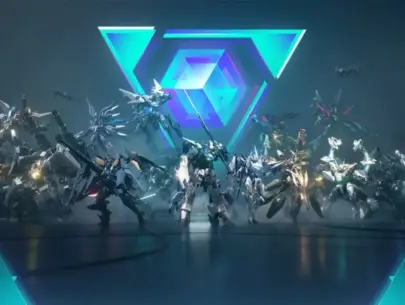 Had this mode existed at launch, Mecha Break might have followed a very different path. There is no turning back the clock, however. Before examining the new update, it is necessary to understand what went wrong and why, less than a year into operation, even the developers have acknowledged that the game is fighting for a second chance. Mecha Break originally launched around two main formats: competitive six-versus-six battles and Mashmak, a PvPvE extraction mode combining exploration, combat and escape mechanics.
Both formats offer their own excitement, but they also share serious problems, including intense matches and a high level of frustration. Normally, an external progression economy would soften those issues by rewarding continued play through currency accumulation, cosmetic unlocks and long-term objectives. In Mecha Break, however, the economy often made the experience worse.
The six-versus-six mode provides extremely limited rewards. Merit Points earned from matches can be exchanged for seasonal boxes and selected cosmetic items, but many purchases are restricted by limited redemption counts or require a paid pass. The high time-to-kill and strong emphasis on team coordination also mean that ranked matches increasingly feel like a second job as players climb into higher divisions.
Chipstone, the main currency used to unlock cosmetics, originally had only two acquisition routes. Players could either purchase it directly or repeatedly grind Mashmak. Those who disliked extraction gameplay naturally felt excluded, but players who entered Mashmak soon discovered that earning rewards there was equally punishing.
Fans of extraction games often joke that they cannot find valuable items, cannot win fights and cannot escape alive. Mecha Break magnified every part of that problem. Extraction opportunities were remarkably scarce. Ten teams entered each match, but the lowest difficulty offered only five extraction points, while the highest difficulty reduced that number to just two.
Intense fights were therefore almost guaranteed near each exit. Many players spent an entire match gathering resources and defeating enemies, only to be ambushed by someone hiding nearby and lose everything at the final moment. Hours of effort could disappear in seconds, leaving players feeling as though they had worked for somebody else’s benefit.
The auction house created another obstacle because Chipstone also functioned as a paid currency. Buyers spending real money naturally preferred rare and expensive goods. Casual players who finally survived an extraction often discovered that nobody wanted the ordinary loot they had carried out. The system rewarded elite players and valuable drops while offering little meaningful progress to everyone else.
Roughly six weeks after launch, the developers appeared to recognise the problem and attempted to change direction. They introduced Covert Operation, the game’s first PvE mode. It essentially removed hostile players from the extraction format, giving participants a much better chance of successfully leaving with their collected resources.
The compromise remained hesitant, however. Covert Operation required a team, offered only three free attempts per week and demanded a rare Covert Operation Plan for any additional runs. Whether the developers were trying to protect the auction-house economy, prevent PvE from drawing players away from PvP or simply working within limited production capacity, the restrictions created another source of pressure.
Because access was limited, players felt compelled to maximise the value of every attempt. Those without strong equipment or detailed knowledge of the game were placed at an even greater disadvantage. In simple terms, the rich became richer. Experienced groups converted their limited entries into valuable rewards, while less established players frequently wasted theirs.
This produced a winner-takes-all environment across nearly every mode. Only a small number of players near the top of the food chain could consistently succeed and enjoy the game’s reward systems. Casual users, unable to gain either a sense of accomplishment or worthwhile progression, quickly left.
That loss was especially damaging for a competitive PvP title because lower-ranked players form the broad foundation of its population. Without them, matchmaking becomes less balanced, queue times grow longer and the remaining audience becomes increasingly concentrated around highly skilled veterans.
A session following Crickex Sign Up could not disguise how abruptly Mecha Break had rebuilt its economy before launch. During testing in February 2025, the game used a substantially different system from the public version released in July. In the test build, Chipstone could occasionally drop after defeating bosses in the extraction mode. By the open launch, it had become almost entirely dependent on direct purchases and auction-house transactions.
For a title developed over more than a decade, replacing the commercial foundation at the final hurdle was an extremely dangerous sign. Once the game officially launched, the consequences of that rushed redesign surfaced one after another, forcing the development team into repeated emergency adjustments.
Changes such as rank-protection items only addressed visible symptoms. They softened individual frustrations but failed to tackle the central reason players were leaving. The game still lacked a welcoming, rewarding path that allowed ordinary users to play regularly, make visible progress and enjoy their mechs without becoming trapped in highly competitive systems.
Mirror Corridor now demonstrates that Mecha Break can support an engaging single-player experience. Its independent difficulty progression, roguelike structure, dramatic battlefield effects and permanent upgrades give players a reason to experiment without worrying about hostile squads or scarce extraction points. More importantly, it allows the mechs themselves to become the centre of the experience.
The mode also reveals how much the original game could have benefited from a strong PvE foundation at launch. Players drawn to the mechanical designs might have remained long enough to learn the combat system, unlock equipment and eventually enter PvP with greater confidence. Instead, many newcomers were immediately pushed into stressful matches or a harsh extraction economy that offered little room for gradual improvement.
For Mecha Break to complete its revival, one successful update will not be enough. The developers must continue expanding accessible PvE content, improve rewards for casual play and ensure that permanent progression does not primarily favour the most dedicated or wealthiest users. Mirror Corridor is an encouraging first step, but rebuilding trust among former players will require consistent changes rather than a temporary rise in activity.
Even after Crickex Sign Up leads some players back toward the game, Mecha Break still has a long road ahead before its comeback can be considered complete. Mirror Corridor proves that the core combat, movement and mech designs remain strong enough to support a better future. The question is whether the developers can turn that quality into a fair and sustainable structure before the remaining audience moves on for good.