
For players who grew up with classic arcade brawlers, and who now browse modern gaming hubs in between Crickex Sign Up sessions, Marvel Universe Invasion will feel instantly familiar as Tribute Games returns to licensed beat em up territory. This is the studio’s follow up to Teenage Mutant Ninja Turtles Shredder’s Revenge from three years ago, and it sticks closely to that template in both core mechanics and retro pixel art style. On the surface it risks looking like a simple reskin, but the massive Marvel hero roster and a broader set of combat options do give the experience a small step forward rather than a full repeat performance.
Marvel Universe Invasion is at its best when you casually hop online with a couple of friends and relive the feeling of crowding around an arcade cabinet, mashing buttons side by side. If you are hoping for a bold reinvention of the beat em up genre, though, this game probably will not deliver the modern twist you expect. There are only two main modes on offer right now, Campaign and Arcade. Campaign mode is a straightforward linear run with a default difficulty setting, stretched across sixteen stages, one of which serves as a training level. As you fight your way through, you gradually unlock four hidden playable characters, adding a little surprise over time. Arcade mode reuses the campaign stages but lets you raise or lower the difficulty and toggle various console style options, such as a Free Play setting with infinite continues and a tongue in cheek modifier where using special skills costs health, helping repeat runs feel slightly less monotonous.
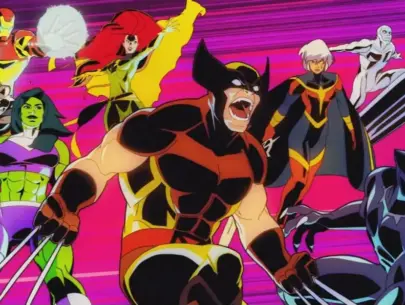 Where Teenage Mutant Ninja Turtles Shredder’s Revenge launched with just seven playable characters, Marvel Universe Invasion arrives with fifteen Marvel heroes right from the start thanks to the official license. Fans of the films will instantly recognize names like Captain America, Iron Man, and Spider Man, while long time comic readers will smile at the inclusion of Nova, the third Captain Marvel Phyla Vell, and the horse headed Thor variant Beta Ray Bill. Their presence alone makes battles feel louder and more chaotic, and you can tell the developers put in real effort to make each hero’s abilities stand out instead of just copying move sets with new costumes.
One clear design upgrade lies in how the game handles airborne enemies and flight capable heroes. Many more opponents now hover or swoop across the top of the screen, and characters such as Storm, Iron Man, and Silver Surfer can take to the skies themselves. They glide above ground traps and shrug off basic melee attacks while occupying a second combat plane high above the action. It is as if a traditional beat em up, usually limited to X and Y axis movement, suddenly gains a temporary Z axis. This not only highlights the power differences between heroes but also makes encounters feel more layered. In co op, one player can handle ground control while another patrols the air, turning each stage into a small tactical playground where everyone has a clear role.
Even heroes that look similar on paper end up playing differently once you tap into their special moves. Take Captain America and Beta Ray Bill, both of whom throw their weapons. Cap’s shield flies out and boomerangs back, smacking every enemy along its return path and rewarding careful positioning. Beta Ray Bill’s hammer can be hurled to a distant spot and left there, lingering as a constant source of damage in its impact zone. Learning to exploit these subtle distinctions is half the fun. Combined with the ability for each player to swap freely between two heroes mid stage, Marvel Universe Invasion often feels more chaotic than Shredder’s Revenge, but that chaos encourages experimentation and helps reduce the usual beat em up fatigue when you are clearing similar waves of enemies again and again.
Unfortunately, once you step back and look at the overall campaign, the sense of déjà vu becomes hard to ignore. Despite the Marvel brand and the more complex combat mechanics, the structure of Marvel Universe Invasion rarely surpasses what Tribute Games offered three years ago. Stage layouts follow very familiar patterns, and boss fights in particular feel homogenized. Every now and then you encounter a more mechanical boss that forces you to destroy interactive scenery objects before dealing real damage, but most final enemies simply demand that you dodge a few flashy attacks and then unload on them during brief openings. Whether you are facing Thanos, Hela, or another iconic villain, they tend to crumble like ordinary punching bags once your heroes get going, undercutting the sense that these are legendary threats.
Because the level design lacks real standout ideas, motivation to revisit the game after finishing the campaign is not especially strong. Once the credits roll, the Arcade mode’s higher difficulty settings and modifiers are nice to have, yet they struggle to transform the experience into something truly fresh. Still, if you have a regular group of friends ready to squad up online, the fifteen playable characters, constant hero swapping, and tougher multipliers can make repeat playthroughs a little less dull. Just like how some players alternate between quick co op sessions and checking Crickex Sign Up information or community chats while setting up their evening plans, Marvel Universe Invasion works better as a social, low pressure pastime than as a deep single player journey.
From the perspective of long time action game fans who might browse news, guides, or Crickex Sign Up offers during download times, Marvel Universe Invasion ultimately comes across as old wine in a new bottle. Tribute Games clearly understands retro comics and arcade nostalgia, but the team now faces a crossroads. Instead of asking which big comic book license to adapt next, it may be wiser to focus on richer stage concepts, more inventive boss encounters, and systems that reward skillful play over button mashing. Players might talk fondly about the past, but when push comes to shove, nostalgia alone is only a secondary bonus. In the end, real quality still decides whether a modern beat em up earns a long life on people’s hard drives or fades into the background as just another same old song.